Prop Trading vs Retail Trading: Which Path is Right for You?
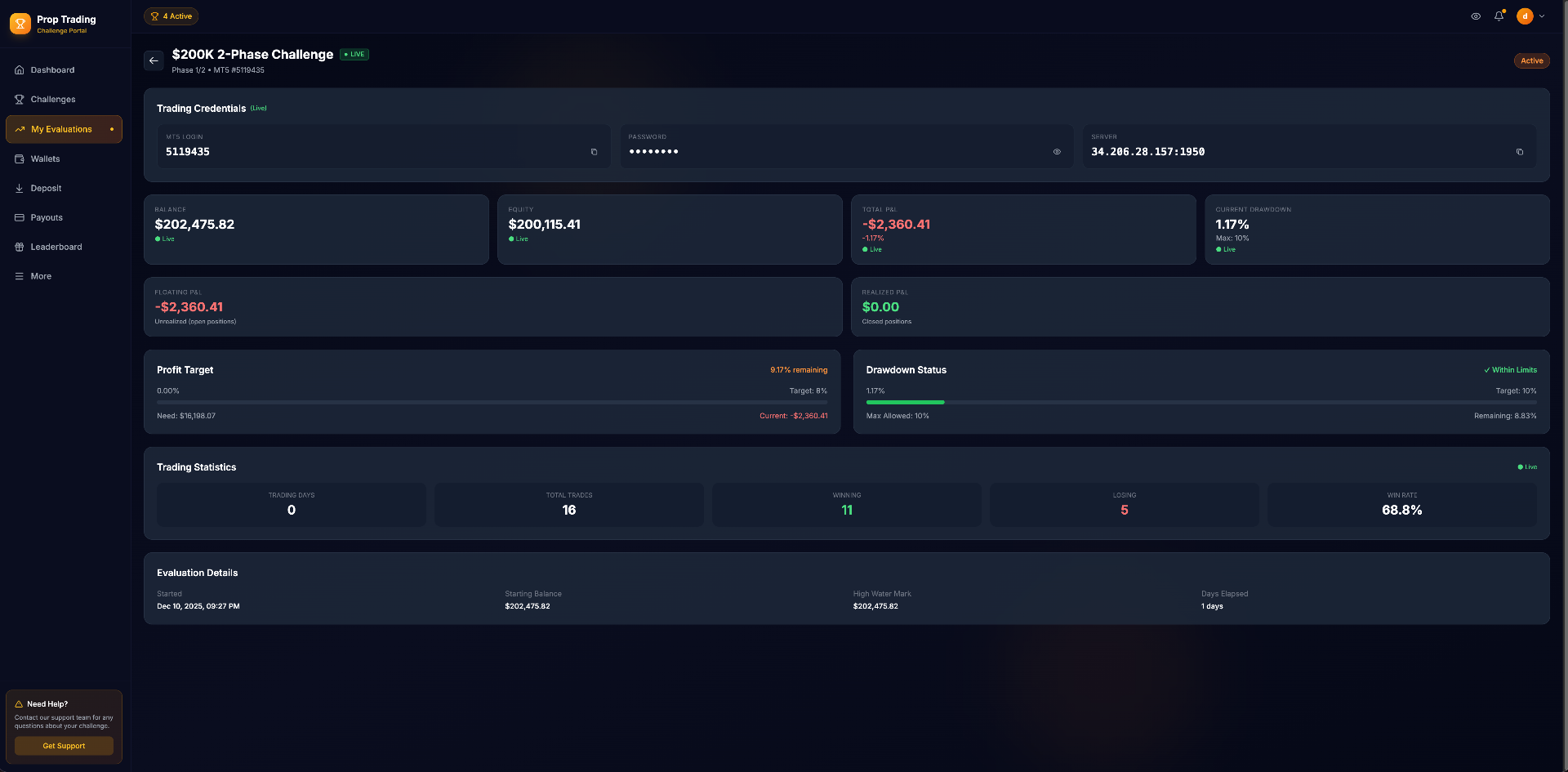
Prop Trading vs Retail Trading: A Complete Comparison
Choosing between trading your own capital and pursuing prop firm funding is a significant decision. This guide compares both paths to help you make an informed choice.
What is Prop Trading?
Proprietary trading involves trading with a firm's capital after passing an evaluation:
• Pay for a challenge to prove your skills
• Trade within specific rules and limits
• Keep 70-90% of profits you generate
• No personal capital at risk (beyond challenge fee)
What is Retail Trading?
Retail trading means trading with your own money:
• Open a brokerage account
• Deposit your personal funds
• Keep 100% of profits (minus fees)
• Bear all risk of losses
Capital Requirements
Prop Trading
• **Entry cost**: $50-$1,000+ (challenge fee)
• **Trading capital**: $10,000-$400,000+ (firm's money)
• **Personal risk**: Limited to challenge fee
Retail Trading
• **Initial capital**: Variable ($100-$50,000+)
• **Trading capital**: Your own savings
• **Personal risk**: Entire account balance
Profit Potential
Prop Trading Scenario
• $100,000 funded account
• 5% monthly return = $5,000
• 80% profit split = $4,000 to you
• Initial investment: ~$500 challenge fee
Retail Trading Scenario
• $10,000 personal account
• 5% monthly return = $500
• 100% profit = $500 to you
• Initial investment: $10,000
Risk Comparison
Prop Trading Risks
• Challenge fees (may need multiple attempts)
• Rule violations can end funding
• Profit splits reduce earnings
• Firm policies can change
Retail Trading Risks
• Personal capital losses
• No safety net
• Emotional trading pressure
• Unlimited downside
Trading Rules and Restrictions
Prop Firms
**Common Rules:**
• Daily drawdown limits (typically 5%)
• Maximum drawdown limits (typically 10%)
• Minimum trading days
• News trading restrictions (varies)
• Position holding limits
Retail Accounts
**Typical Restrictions:**
• Margin requirements
• Pattern day trader rules (US)
• Minimum balance requirements
• Broker-specific policies
Advantages of Prop Trading
1. Access to Capital
Trade larger positions than personal funds allow
2. Limited Personal Risk
Only lose challenge fees, not trading capital
3. Professional Environment
Structured rules encourage discipline
4. Scalability
Grow to multiple six-figure accounts
5. Proof of Skill
Funded status validates your abilities
Advantages of Retail Trading
1. Complete Freedom
No rules, restrictions, or profit splits
2. Keep All Profits
100% of gains are yours
3. No Evaluation Pressure
Trade at your own pace
4. Strategy Flexibility
Any style, any timeframe, any risk level
5. No Third-Party Dependence
Account is fully yours
Who Should Choose Prop Trading?
**Ideal Candidates:**
• Consistent, profitable traders
• Those with limited starting capital
• Disciplined risk managers
• Traders seeking larger positions
• Those who work well within rules
**Not Ideal For:**
• Aggressive/high-risk traders
• Those who struggle with rules
• Inconsistent performers
• Traders needing complete flexibility
Who Should Choose Retail Trading?
**Ideal Candidates:**
• Traders with sufficient capital
• Those wanting complete control
• Experimental/learning traders
• Long-term investors
• Those uncomfortable with evaluations
**Not Ideal For:**
• Undercapitalized traders
• Those who need external discipline
• Traders wanting large position sizes
Hybrid Approach
Many successful traders do both:
• Use prop accounts for larger capital
• Maintain personal account for flexibility
• Build personal capital from prop profits
• Diversify across multiple firms
Making Your Decision
Consider Prop Trading If:
• You have a proven, consistent strategy
• Limited personal capital to trade with
• Want to scale quickly
• Comfortable following rules
Consider Retail Trading If:
• Have significant capital available
• Want complete freedom
• Still developing your strategy
• Prefer no external pressure
Conclusion
Neither path is universally better—it depends on your situation, skills, and goals. Many traders start with prop firms to build capital, then transition to trading their own funds or maintain both simultaneously.
Ready to explore prop trading? [Start your challenge](/products/prop-trading) with Finovex and access professional funding opportunities.
Ready to transform your brokerage?
See how Finovex can help you launch faster with enterprise-grade infrastructure.
Request a Demo