Prop Trading Challenge Rules Explained: What Every Trader Needs to Know
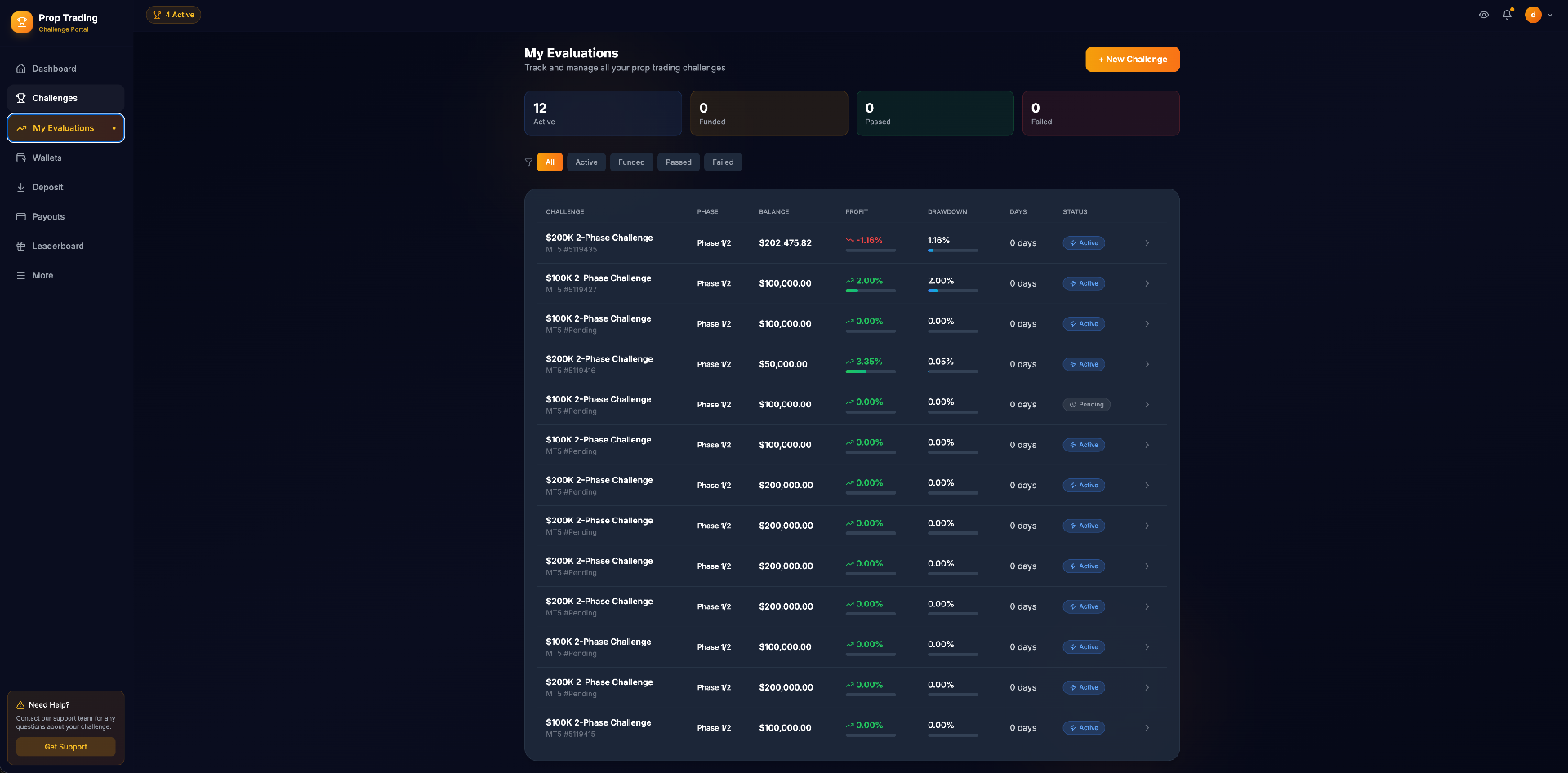
Understanding Prop Trading Challenge Rules
Proprietary trading challenges are designed to identify skilled traders who can manage risk effectively while generating consistent profits. This guide breaks down the key rules and requirements you'll encounter.
The Two-Phase Evaluation Model
Most prop firms use a two-phase evaluation process:
Phase 1: The Challenge
• **Profit target**: Typically 8-10% of account balance
• **Daily drawdown limit**: Usually 5% of initial balance
• **Maximum drawdown**: Typically 10% of initial balance
• **Time limit**: 30 days (often unlimited in modern firms)
• **Minimum trading days**: 4-5 days required
Phase 2: Verification
• **Profit target**: Lower than Phase 1 (usually 5%)
• **Same drawdown rules apply**
• **Purpose**: Confirm consistency, not luck
Key Rules Explained
Drawdown Limits
Understanding drawdown is critical for passing challenges:
• **Daily Drawdown**: Maximum loss allowed in a single trading day
• **Maximum Drawdown**: Total loss allowed from highest account balance
• **Trailing vs Static**: Some firms use trailing drawdown that follows profits
Profit Targets
Setting realistic expectations:
• Phase 1: 8-10% is standard
• Phase 2: 5% is common
• No minimum time requirement in most modern firms
Trading Restrictions
Common rules you'll encounter:
• **News trading**: Some firms restrict trading during major news events
• **Weekend holding**: May or may not be allowed
• **Lot size limits**: Maximum position size relative to account
• **EA/Algo trading**: Usually allowed, but check specific rules
What's Typically Allowed
Trading Styles
• Scalping and day trading
• Swing trading and position trading
• Technical and fundamental analysis
• Automated trading systems (EAs)
Instruments
• Forex pairs (major, minor, exotic)
• Indices (US30, NAS100, etc.)
• Commodities (gold, oil)
• Cryptocurrencies (Bitcoin, Ethereum)
What's Typically NOT Allowed
Prohibited Practices
• Martingale strategies
• Grid trading without stop losses
• Account sharing
• Copy trading from outside sources
• Exploiting platform errors
High-Risk Behaviors
• Gambling/all-in trades
• Holding through high-impact news (firm dependent)
• Correlation trading across multiple accounts
Tips for Passing Your Challenge
1. Risk Management First
• Never risk more than 1-2% per trade
• Set stop losses before entering trades
• Account for spread and slippage
2. Plan Your Trading
• Have a clear strategy before starting
• Don't rush to hit targets early
• Focus on consistency over quick profits
3. Track Everything
• Keep a trading journal
• Review winning and losing trades
• Identify patterns in your performance
4. Understand the Rules
• Read all terms and conditions
• Contact support if unclear
• Don't assume rules from other firms apply
Conclusion
Success in prop trading challenges comes from understanding the rules completely and trading with discipline. Focus on risk management, follow your strategy, and treat the challenge account like real capital.
Ready to start your prop trading journey? [Explore our challenge options](/products/prop-trading) and become a funded trader.
Ready to transform your brokerage?
See how Finovex can help you launch faster with enterprise-grade infrastructure.
Request a Demo